
How to Choose the Right HMS for Your Organization

healthspire-medical-consultation.jpg

Let’s be honest. Choosing new software for your hospital is one of those decisions that can keep you up at night. It is not like buying a new MRI machine or renovating the cafeteria. Those are tangible. You can see them, touch them, and understand exactly what you are getting. Software is different. It is […]

Telemedicine and Healthcare Software: The Future of Patient Care in 2026

Telemedicine healthspire

It’s a quiet Tuesday morning. A young mother in a rural town sits on her couch, her fussy toddler on her lap. Instead of packing the baby into the car for a two-hour drive to the nearest pediatrician, she opens her phone. Within minutes, she’s face-to-face with a doctor who listens, diagnoses an ear infection, […]

How Healthcare Analytics Helps Improve Patient Outcomes in 2026
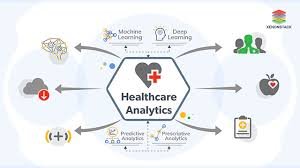
How Healthcare Analytics Helps Improve Patient Outcomes

How Healthcare Analytics Helps Improve Patient Outcomes Think about the last time you sat in a waiting room. The doctor finally walked in, asked you to repeat your entire history, and then typed furiously into a computer while barely making eye contact. Afterward, you left wondering if they really understood your situation. That feeling of […]

Benefits of Cloud-Based Healthcare Software
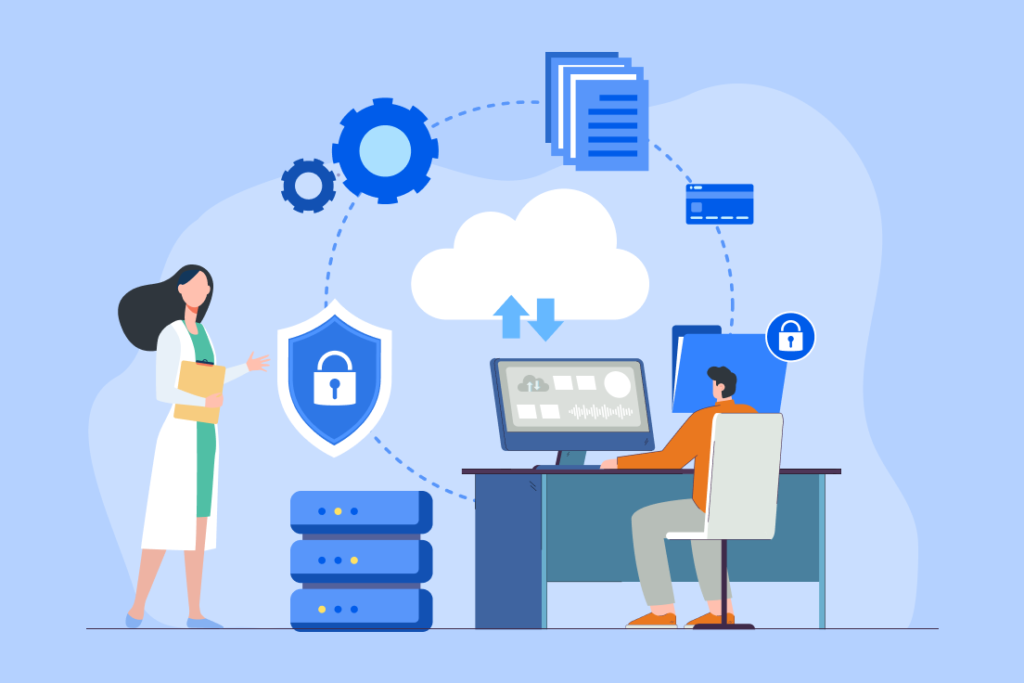
Benefits of Cloud-Based Healthcare Software for Hospitals and Clinics

A few years ago, if you walked into a hospital IT department, you would likely see rows of servers humming away in a temperature-controlled room. A dedicated team spent countless hours managing hardware, installing updates, and praying that nothing crashed. Today, that scene is disappearing. In its place, something quieter and more powerful is taking […]

7 Common Hospital Challenges Technology Solves in 2026 | HealthSpire

Let’s be honest for a moment. Running a hospital today feels like juggling flaming torches while riding a unicycle. You have patients who need care. Staff who are exhausted. Bills that need to be paid. Data scattered everywhere. And somewhere in all that chaos, you are still expected to deliver perfect outcomes every single time. Sound familiar? You are not alone. Hospitals around the world face the same seven core challenges. The good news is that in 2026, technology has finally caught up with these problems. Modern healthcare software, powered by artificial intelligence, automation, and smart integrations, is solving these issues in ways we could only dream about a few years ago. At HealthSpire.org, we have helped countless hospitals navigate these challenges. Let us walk you through each one—and show you exactly how technology provides a real, practical solution. Challenge #1: Fragmented Patient Data A patient walks into your emergency department. They have a complicated medical history. They see three different specialists across two different health systems. But none of those records are in your system. What do you do? For most hospitals, the answer has been frustrating: repeat tests, call around for records, or make decisions with incomplete information. One study found that up to 97% of hospital data goes unused, locked away in siloed systems that do not talk to each other. Healthcare data remains scattered across different organizations and electronic health record (EHR) systems, making it nearly impossible to see the full picture of a patient's journey. The Technology Solution: Interoperable EHRs and FHIR Standards The solution is interoperability—the ability for different systems to share and use data seamlessly. The HL7 FHIR (Fast Healthcare Interoperability Resources) standard has emerged as the leading healthcare data standard to address persistent barriers in fragmented exchange and inconsistent data harmonization. Modern EHRs are shifting from simple documentation tools into connected data environments where imaging, diagnostics, clinical notes, and patient history converge in real time. When information moves with the patient rather than remaining locked within institutions, decision-making accelerates, duplication falls, and care becomes inherently more coordinated. Hospitals implementing connected data environments are already seeing tangible impact: repeat tests reduced by 15–25% and diagnostic timelines shortened by 20–30%. For a deeper dive into how data sharing transforms patient care, check out our earlier article on Electronic Medical Records (EMR) vs Electronic Health Records (EHR): What's the Difference?. You can also explore HealthIT.gov for official guidance on interoperability standards and compliance requirements. Challenge #2: Crippling Physician and Staff Burnout Your clinicians are tired. Not just "long week" tired. Bone-deep, soul-weary, questioning-their-career-choice tired. In 2025, 41.9% of physicians reported experiencing at least one symptom of burnout. A staggering 81% of medical office staff report symptoms of burnout, with up to 40% of their time spent on administrative work. Almost half of clinicians say that tiredness has impaired their ability to treat patients effectively. The Mercer analysis predicts that by 2026, there will be a shortfall of more than 3 million healthcare professionals globally. This is not just a wellness issue. It is a patient safety crisis. The Technology Solution: AI Scribes and Ambient Intelligence The most immediate fix is reducing documentation burden. AI-powered ambient scribes are changing everything. A 2026 study found that physicians saved an average of 64 minutes per day using AI scribes—more than an hour of recovered clinical or personal time every working day. Canada Health Infoway survey data found that 94% of providers said AI scribes saved time, with 62% reporting savings of at least 30 minutes per day. These systems listen to doctor-patient conversations and automatically transform them into structured clinical notes. Less time typing means more time looking at the patient. Less after-hours charting means more time with family. Less burnout means better retention. If you want to understand how AI is reshaping healthcare management more broadly, read our in-depth guide on The Role of AI in Healthcare Management Systems. For an external perspective, the American Medical Association has excellent resources on physician burnout and technology solutions. Challenge #3: Revenue Leaks and Denials Management Here is a number that should make every hospital executive uncomfortable: U.S. hospitals lose an estimated $262 billion annually to administrative complexity and revenue cycle inefficiency. On average, 10–12% of all claims are denied, and over 40% of those denials are preventable. Even worse, 63% of hospital leaders report they are not taking a proactive approach to identifying revenue risk. Denials have become so significant that one-third of respondents say the financial impact is now discussed at the executive level. The Technology Solution: AI-Powered Revenue Cycle Automation The solution is intelligent automation embedded directly into revenue cycle workflows. AI has made a significant impact in triaging and appealing insurance denials, especially those requiring complex decision-making and access to managed care agreements, payer policies, and medical records. Health systems are seeing remarkable results. Automation has delivered an 82% reduction in manual claim errors, reduced denial rates to under 2%, and cut accounts receivable days from 45 to 33. One health system saw an 83% reduction in eligibility and registration-related denials within the first three months of deploying automation. For a complete look at how healthcare software improves your bottom line, explore our guide on Hospital Management Systems. You can also check out the Healthcare Financial Management Association (HFMA) for industry benchmarks and best practices on revenue cycle optimization. Challenge #4: Disconnected Care Coordination Healthcare delivery often breaks down between access, diagnosis, follow-up, and specialist intervention. A patient sees their primary care doctor, gets referred to a specialist, undergoes testing at a lab, and fills prescriptions at a pharmacy—but none of these pieces talk to each other. Clinicians are forced to work around the gaps, repeating tests, chasing reports, or making decisions without the full clinical picture. The result is not just operational inefficiency. It impacts patient trust, treatment adherence, and long-term health outcomes. The Technology Solution: Integrated Care Platforms and Health Information Exchanges Integrated hospital management models connect primary, secondary, and digital care into one seamless ecosystem—covering everything from outpatient and emergency care to maternal health, chronic disease management, diagnostics, pharmacy, and telemedicine. New interoperable platforms remove fragmentation entirely. As one health leader explained, "A radiologist sees images in one place. A cardiologist sees test results somewhere else. No one sees the full picture." Modern platforms change that by enabling image and clinical data exchange across hospitals, allowing clinicians across institutions to access the same patient records. For hospitals looking to improve care coordination, our article on Appointment Scheduling Software offers practical tips on streamlining patient access. For an authoritative industry perspective, the National Health Information Sharing and Analysis Center (NH-ISAC) provides resources on health information exchange best practices. Challenge #5: Cybersecurity Vulnerabilities Healthcare remains the most expensive industry for data breaches. The average cost of a breach in healthcare is $7.42 million globally** and exceeds **$10 million per breach in the United States. In 2025 alone, 445 ransomware attacks were recorded on hospitals, clinics, and other direct care providers, with an additional 130 attacks targeting businesses within the healthcare sector. The Change Healthcare attack alone compromised the protected health information of 100 million individuals, disrupted care delivery nationwide, and incurred $2.4 billion in response costs. Small and rural hospitals are particularly vulnerable, with legacy systems offering lagging cybersecurity protections. The Technology Solution: Zero-Trust Security and Modern Cyber Defenses Modern cybersecurity is shifting from perimeter-based to behavior-based models. Key defenses include deploying multi-factor authentication everywhere, automatically patching vulnerabilities, implementing endpoint protection with early detection, and following the 3-2-1 backup rule (three copies, two different media types, one offsite). Healthcare organizations are also adopting zero-trust architecture, AI-based threat detection, and real-time network monitoring. The federal government is stepping in as well, with $800 million allocated to help critical access hospitals adopt essential cybersecurity practices. For a broader understanding of how healthcare software protects sensitive data, revisit our article on Electronic Medical Records (EMR) vs Electronic Health Records (EHR). The Cybersecurity and Infrastructure Security Agency (CISA) offers free resources and guidance specifically for healthcare organizations. Challenge #6: Staffing Shortages The numbers are sobering. There is a projected shortage of 90,000 physicians by 2036. Hospitals face a current vacancy rate of 7.3%, equating to roughly 107,000 full-time equivalent positions. Margins are averaging around 1.5% nationally, making it impossible to solve access problems simply by adding headcount. The Technology Solution: AI-Powered Workforce Management and Automation Technology is filling the gaps. AI systems now predict future demand patterns by analyzing historical data, patient arrivals, seasonal variations, and even external influences such as weather and local events. AI-enabled skill-based rostering systems align staff competencies with patient needs while considering operational constraints and staff preferences. Healthcare providers are increasingly turning to AI-powered reception systems to handle appointment scheduling, call routing, patient intake, reminders, and frequently asked questions—providing 24-hour call coverage while reducing pressure on front-desk staff. Automation tools reduce administrative burdens, allowing healthcare professionals to dedicate more time to caring for patients. Read our guide on How Healthcare Software Improves Patient Experience to see how automation benefits both staff and patients. The American Hospital Association has excellent data on workforce trends and technology solutions. Challenge #7: Outdated, Siloed, and Inflexible Legacy Systems Many hospitals are still running on legacy EHR systems that were designed for large hospital networks and retrofitted—often poorly—for their specific needs. Key frustrations include high system costs, lack of flexibility for specific workflows, burdensome implementation and upgrade cycles, and inadequate interoperability with external providers. In fact, more than half of rural hospitals (55%) report active plans to replace or comprehensively reassess their EHR systems by the end of 2026. The Technology Solution: Cloud-Based, Integrated Platforms The future is cloud-first. Cloud-based solutions offer lower upfront costs, faster implementation timelines, automatic updates, and built-in support for emerging interoperability and cybersecurity standards. Modern platforms are moving beyond fragmented technology stacks toward unified systems that orchestrate clinical, operational, and financial workflows together. Staff no longer need to switch between five different applications to get their work done. Data flows seamlessly. Updates happen automatically. And the system grows with you rather than holding you back. For a comprehensive overview of what modern hospital software should include, explore our Hospital Management Systems guide. For vendor comparisons and independent assessments, KLAS Research provides trusted industry rankings. The Bottom Line Seven challenges. Seven solutions. None of them magic. All of them real and proven. The hospitals that thrive in 2026 and beyond are not the ones with the biggest budgets. They are the ones that strategically apply the right technology to the right problems. They stop fighting fires and start building systems. They give their clinicians time back, their patients better experiences, and their bottom lines predictable stability. At HealthSpire.org, we are here to help you make those choices. Whether you are replacing a legacy system, implementing AI for the first time, or just trying to figure out where to start, we have resources, guides, and experts ready to assist. Have a specific challenge you are facing? Reach out to our team. We would love to hear from you.

Let’s be honest for a moment. Running a hospital today feels like juggling flaming torches while riding a unicycle. You have patients who need care. Staff who are exhausted. Bills that need to be paid. Data scattered everywhere. And somewhere in all that chaos, you are still expected to deliver perfect outcomes every single time. […]

The Role of AI in Healthcare Management Systems in 2026
AI in HealthCare Software HealthSpire

Let me tell you about a quiet revolution happening right now in clinics and hospitals around the world. It is 10:30 AM on a Tuesday. A doctor walks into an exam room. Instead of typing furiously into a computer, she simply talks to the patient. An ambient AI system listens, captures the conversation, and automatically […]

Why Every Modern Clinic Needs Appointment Scheduling Software (2026)
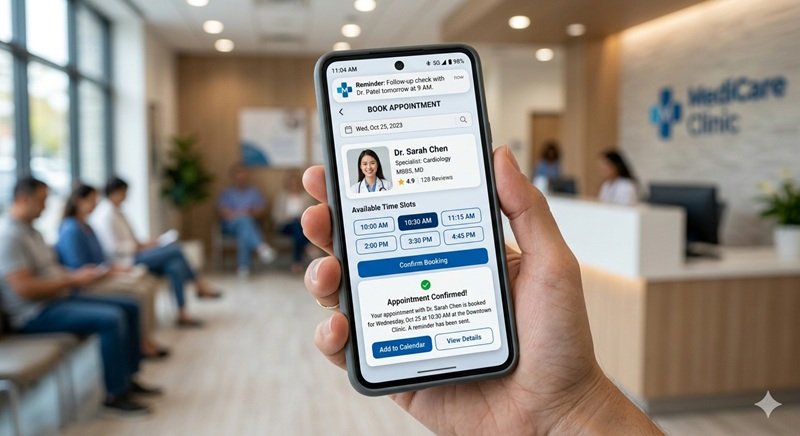
Why Every Modern Clinic Needs Appointment Scheduling Software (2026)

It is 10:00 AM on a Tuesday. You have three front desk staff on the phone. A patient is waiting to book a follow-up, another is trying to cancel because their child got sick, and a third is calling to ask what time their appointment was tomorrow. Meanwhile, the phone keeps ringing. The line at […]

How Healthcare Software Improves Patient Experience

HealthCare Software HealthSpire

The true measure of great healthcare software is often overlooked. It’s not just about billing or compliance; it’s about how it makes a person feel when they’re most vulnerable. Can they get an appointment quickly? Do they have to repeat their story? Is their information safe and accessible? In 2026, technology is finally bridging the […]

Top 10 Benefits of Using a Hospital Management System

Running a hospital is like conducting an orchestra. You have doctors, nurses, lab technicians, billing staff, pharmacists, and administrators—all playing different instruments. Without a unified sheet of music, the result is noise, not harmony. That’s exactly where a Hospital Management System (HMS) steps in. It’s not just software. It’s the central nervous system of a modern healthcare […]